
Filipinos can now have eligible electronic documents notarized online following the official launch of the Supreme Court’s eNotarization service on October 19, 2026.
The new system allows individuals and businesses to process electronic documents through accredited online platforms and authorized Electronic Notaries Public (ENPs).
This offers a more convenient option for people who need notarized documents for legal, business, and personal transactions.
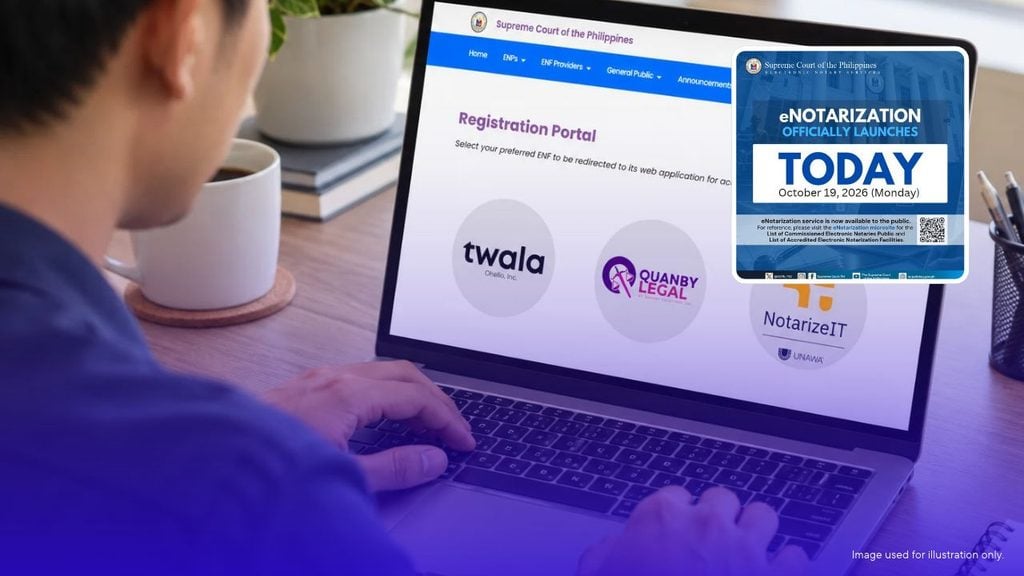
Supreme Court Accredits Three Online Notarization Platforms
The Supreme Court has announced the first three accredited Electronic Notarization Facilities (ENFs) authorized to provide the service.
These are:
- Twala, operated by Ohelio, Inc.
- QLegal, operated by Quanby Solutions, Inc.
- NotarizeIT, operated by UNAWA.
Users can register through these platforms to begin the electronic notarization process.
The official registration links are available through the Supreme Court’s eNotarization portal.
How Filipinos Can Notarize Documents Online
Applicants must first register with an accredited electronic notarization provider.
The general process involves:
- Visit the official Supreme Court eNotarization portal.
- Choose an accredited platform and create an account.
- Complete the required identity verification.
- Prepare the electronic document for notarization.
- Select a commissioned Electronic Notary Public.
- Complete the required signing and notarization procedures.
Applicants can check the official list of commissioned electronic notaries before proceeding.
The exact steps may vary depending on the selected platform and the type of notarization requested.
What Documents Can Be Notarized Electronically?
The service covers eligible electronic documents that meet the Supreme Court’s requirements.
These may include certain affidavits, sworn statements, and agreements requiring notarization.
However, not all documents qualify for electronic notarization.
Applicants preparing legal authorizations may also find our guide on processing a Special Power of Attorney useful.
Users should confirm whether the institution receiving their documents accepts electronically notarized copies.
What Filipinos Should Know About the New Service
Electronic notarization provides another way to complete legal transactions without always visiting a traditional notary’s office.
However, applicants must still comply with identity verification, signing, and other applicable requirements.
Filipinos living overseas should also check the special rules governing remote electronic notarization before applying.
For registration, instructional materials, and further announcements, visit the Supreme Court’s official eNotarization website.
The Supreme Court also provides an Electronic Notary Services contact page for questions or concerns.