
Every school year, teachers prepare classrooms, update learning materials, and stretch their personal budgets to meet teaching needs. That’s why the ₱5,000 cash allowance matters—it supports real, day-to-day expenses that come with teaching.
But not everyone is clear on who qualifies, what it can be spent on, or how schools should release it. The DBM–DepEd Joint Circular No. 2, s. 2021 settles these questions. Understanding it helps teachers, administrators, and LGUs ensure transparency and compliance.
Below is a clear breakdown of the rules, based on the certified true copy of the circular.
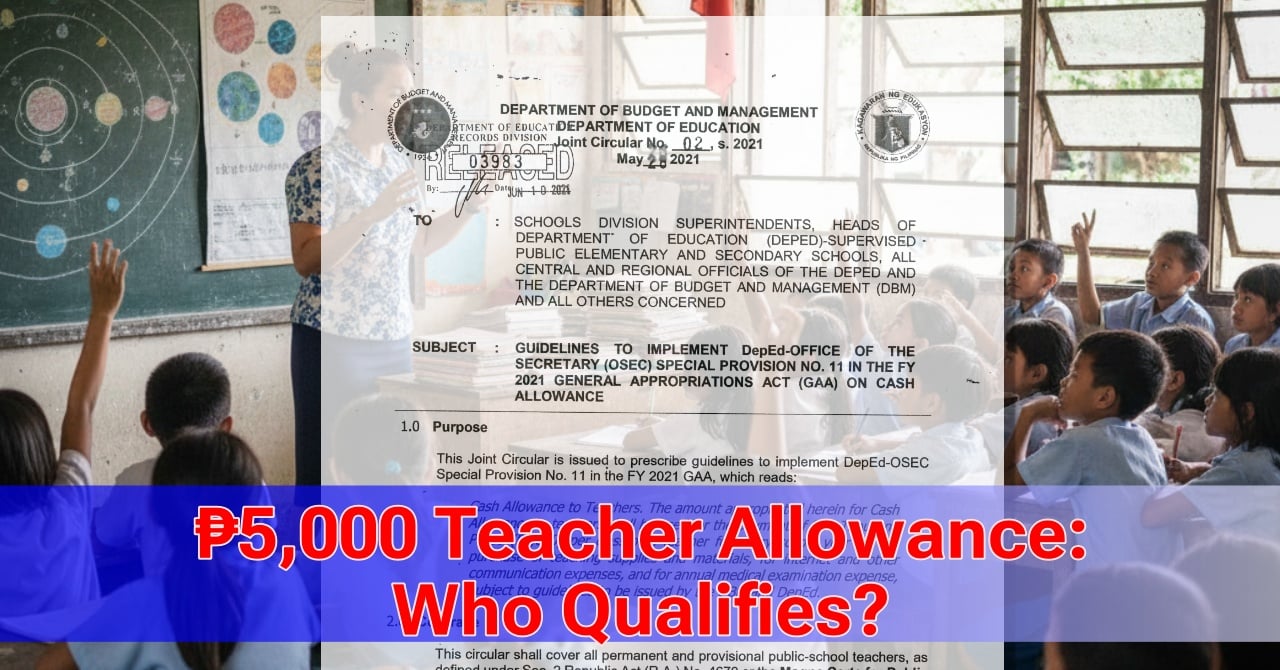
What the Cash Allowance Is For
The circular explains that the allowance supports common teaching needs—things teachers usually pay for out of pocket, such as:
- Teaching supplies and materials—printed or digital
- Internet and communication expenses
- Annual medical and physical examinations
Why it matters
These costs appear even before the first day of school. Clear rules help teachers plan, and they guide schools on how to document and release funds properly.
Who Is Covered
Teachers who meet the criteria under RA 4670 are eligible, which include the following groups:
- Permanent and provisional public school teachers
- ALS mobile teachers and district ALS coordinators
- Teachers in elementary, junior high, senior high, and community learning centers
- Anyone assigned at least one teaching load
Why it matters
This removes uncertainty, especially for ALS teachers and faculty with mixed teaching and administrative duties.
Certified-True-Copy-JC-on-Cash-AllowanceWho Is Not Eligible
The circular outlines clear exclusions:
- Teachers without a teaching load
- Those on AWOL, indefinite leave, maternity leave, or study leave
- Teachers who received penalties for an offense in the previous school year
- Anyone no longer in service on the opening of classes
Important clarification
A teacher who returns to active duty and receives at least one teaching load becomes eligible for a pro-rated amount.
Official Pro-Rated Rates
| Duty Assumption (Days After Opening) | % of Allowance | Amount |
| Within first 30 days | 100% | ₱5,000 |
| 31–90 days | 80% | ₱4,000 |
| 91–150 days | 50% | ₱2,500 |
| After 150 days | 20% | ₱1,000 |
Why it matters
This table makes it easier for school heads and LGUs to calculate the correct amount and avoid audit issues.
When and How the Allowance Should Be Released
The circular directs that the allowance must be released:
- Before the start of every school year, as stated in the school calendar
- Or earlier in case of emergency adjustments decided by DepEd
Mode of payment: through payroll systems or any authorized payment channel.
Why it matters
Teachers need these funds to prepare classrooms. Delays affect readiness and can disrupt teaching plans.
Allowed vs. Not Allowed Expenses
Allowed
- Instructional materials
- Classroom supplies
- Internet/data load
- Communication tools
- Medical exam expenses
Not allowed
- Personal or unrelated items
- Large equipment or capital outlay
- Double-claiming from other programs
Why it matters
These boundaries help protect both teachers and schools from compliance issues during audits.
Legal Basis Behind the Circular
The joint circular draws authority from:
- Special Provision No. 11, FY 2021 General Appropriations Act
- Joint implementation by DBM and DepEd for uniform nationwide rules
- Alignment with RA 4670 (Magna Carta for Public School Teachers) for medical exam entitlements
Understanding the legal foundation helps LGUs and advocacy groups when proposing policy improvements or supplementary support.
What This Means for Stakeholders
Teachers
Know your eligibility, allowable expenses, and release schedules so you can prepare and track your entitlement.
School Administrators
Ensure correct computation, documentation, and timely release. Avoid inconsistencies that lead to grievances or audit concerns.
LGUs
Use the circular as a baseline when designing supplemental programs; avoid overlaps with national allowances.
Advocacy Groups and Watchdogs
The circular helps you anchor demands for better teacher welfare and track compliance across divisions.
How to Make Sure You Receive the Cash Allowance Without Issues
Many teachers get confused not because the rules are unclear, but because school-level practices vary. Here’s a simple, step-by-step way to avoid problems.
- Confirm your teaching load for the current school year.
The circular requires at least one teaching load for eligibility, including for returning teachers. This is the first item reviewers check.
- Update your employment records with your school or division office.
Status changes (leave, reassignment, or return to duty) affect eligibility. Make sure they are documented early.
- Coordinate with your school’s finance or payroll officer.
Ask about the planned release date and verify if your name is included in the payroll list for the allowance.
- Keep receipts for allowable expenses.
While liquidation is generally not required, receipts help protect you during random checks or COA inquiries.
- Track releases using your School Calendar.
The allowance must be released before classes open. If it is not, you can raise the delay with your school head or division office.
- Know when you qualify for pro-rated amounts.
If you start teaching after school opening, use the official table—this prevents underpayment or overpayment.
- Report unresolved concerns properly.
Unresolved issues should be referred to DBM or DepEd for resolution. Always escalate through your school head first.
Frequently Asked Questions
- Is the ₱5,000 allowance permanent?
It continues as long as the GAA includes a similar special provision. The 2021 circular explains implementation for that fiscal year. - Can I use the allowance to buy gadgets?
No. The circular prohibits capital outlay purchases like tablets, laptops, or printers. - Are ALS teachers entitled?
Yes. They are explicitly included in the coverage. - What if I am on maternity leave during school opening?
You are not eligible until you return to duty and receive a teaching load. You may then receive a pro-rated amount. - What should I do if the release is delayed?
The circular states that issues must be elevated to DBM or DepEd for resolution. Bring concerns to your division office first.
Conclusion
Understanding the DBM–DepEd Joint Circular No. 2, s. 2021 gives teachers the confidence to claim what they are entitled to and helps schools release funds correctly and on time. When everyone knows the rules—teachers, school heads, LGUs, and advocates—the allowance becomes more than a budget line. It becomes part of a system that supports classrooms, strengthens transparency, and reminds teachers that their work deserves proper resources. And as discussions on teacher welfare continue, this circular serves as a clear starting point for stronger, more responsive policies in the years ahead.