
Raising children while assigned abroad brings both opportunity and pressure. One of the biggest costs for families posted overseas is schooling. In many host countries, free public education is either unavailable to foreigners or offered only in a language that children may struggle to use. To ease this burden, the Philippine government provides an Education Allowance for the legal dependent children of foreign service personnel.
This guide explains how the Education Allowance works, who qualifies, what expenses are covered, and how families can successfully file a claim. It is written to help parents plan ahead and avoid common mistakes that delay or deny reimbursement.
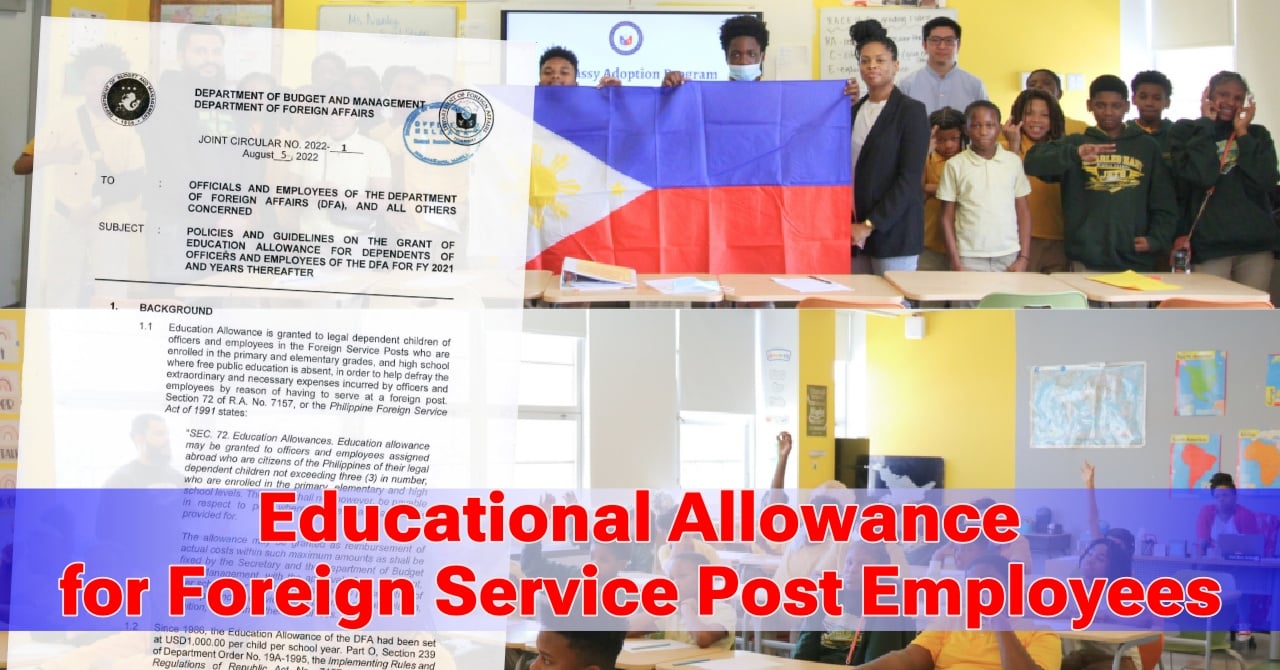
What Is the Education Allowance
The Education Allowance is a cash reimbursement provided to Philippine government personnel officially assigned abroad. It helps pay for school expenses of their legal dependent children when free public education is not available at the foreign service post.
The policy was formally consolidated under DBM-DFA Joint Circular No. 2022-1, which applies starting Fiscal Year 2021 and onward. Earlier General Appropriations Acts raised the funding limits, while a later executive order updated the overall overseas allowance framework.
The allowance is not a loan and not a fixed monthly payment. It is a reimbursement based on actual school expenses, subject to limits and documentation rules.
DBM-DFA-JOINT-CIRCULAR-NO-2022-1Who Is Eligible for the Education Allowance
Eligible government personnel
You may qualify for the Education Allowance if you are:
- An officer or employee of the Philippine government
• Officially assigned abroad
• Serving in a Foreign Service Post such as an embassy, consulate, or permanent mission
This benefit mainly applies to personnel of the Department of Foreign Affairs, but it may also cover other national government employees officially posted overseas under approved assignments.
Eligible dependents
The allowance applies only to legal dependent children who meet all of the following conditions:
- Legally recognized dependents of the assigned employee
• Enrolled in primary, elementary, or high school
• Studying in a location where free public education is not available
The maximum number of children covered is three dependents per officer or employee.
College or university level expenses are not covered under this allowance.
Why the Allowance Exists
Foreign service assignments often place families in countries where:
- Public schools charge tuition for foreign nationals
• Instruction is conducted only in the local language
• International or private schools are the only practical option
Without government support, education costs can quickly exceed what an overseas allowance or regular salary can absorb. The Education Allowance exists to protect families from carrying the full cost of mandatory schooling while serving the country abroad.
What Expenses Can Be Reimbursed
The Education Allowance covers necessary and verifiable school costs. These usually include:
- Tuition or matriculation fees
• Required school fees
• Books and learning materials officially required by the school
All expenses must be supported by receipts and proof of payment. Optional items such as extracurricular activities, uniforms, transportation, and personal gadgets are usually not reimbursable unless explicitly allowed by agency guidelines.
Always confirm which items are allowed before paying.
Maximum Amount You Can Claim
The allowed amount per child has changed over the years as government funding increased.
Key funding increases under the GAA
Under RA 11518, the maximum education allowance was raised to USD 3,500 per dependent.
Under RA 11639, the maximum was further increased to USD 5,000 per dependent.
These increases reflected the rising cost of international education in many foreign posts.
Executive Order updates
In October 2024, Executive Order No. 73 approved updated rates and indices for overseas allowances. This executive order references Joint Circular No. 2022-1 as part of the official allowance framework.
While the executive order updates overall allowance policies, actual education allowance payments still depend on annual appropriations and agency rules.
Important Limits You Should Know
Even if a maximum amount is stated in law or policy, several limits apply:
- Payment depends on available funds in the current GAA
• Claims are capped per child and per fiscal year
• The allowance does not apply if free public education is available at the post
• Reimbursement is subject to audit and review
This means families should never assume automatic payment of the full maximum amount.
How the Education Allowance Is Paid
The allowance is paid on a reimbursement basis. This means:
- You must first pay the school expenses
• You submit a claim with complete documents
• The agency reviews and approves the claim
• Payment is released if funds are available
There is no advance or automatic disbursement unless your agency has specific internal rules allowing partial advances.
Step-by-Step Guide to Filing a Claim
Step 1. Confirm eligibility before enrollment
Before enrolling your child, confirm:
- Your assignment status abroad
• Your child’s dependent status
• Whether free public education exists at your post
• The current allowable rates under the GAA and EO
This prevents spending on items that cannot be reimbursed later.
Step 2. Keep complete documentation
Prepare and keep originals of the following:
- Official school receipts
• Proof of payment
• Enrollment forms or certificates
• School fee breakdown
• Proof of dependency
Missing or unclear documents are the top reason claims get denied.
Step 3. Follow your agency checklist
Each agency follows the DBM and department checklist under Joint Circular No. 2022-1. Coordinate with your HR or Finance office to ensure your submission follows the latest requirements.
Step 4. Track processing timelines
Ask your agency:
- When claims are accepted
• Cutoff dates for submission
• Expected processing time
• Who to contact for follow up
Delays often happen because claims are submitted late or during budget bottlenecks.
Common Problems and How to Avoid Them
Problem 1. Claims rejected due to missing documents
Solution: Always submit original receipts and complete enrollment records. Photocopies without certification are often disallowed.
Problem 2. Expecting full payment but receiving less
Solution: Understand that the allowance is capped and subject to budget availability. The approved amount may be lower than actual expenses.
Problem 3. Paying expenses before confirming eligibility
Solution: Coordinate with HR or Finance before enrolling your child, especially when posted to a new country.
Problem 4. Policy changes mid assignment
Solution: Check the latest GAA and executive orders each school year. Rates and rules can change.
Important Reminders Before You File
- The allowance is not automatic
• Documentation quality matters
• Budget availability affects payment timing
• Policies are reviewed and updated regularly
Always verify the latest guidance before filing a claim.
Frequently Asked Questions (FAQs)
- Who can receive the Education Allowance?
Philippine government employees officially assigned abroad may claim the allowance for their legal dependent children, subject to agency rules.
- How many children are covered?
The allowance covers a maximum of three legal dependent children per officer or employee.
- What school levels are included
Only primary, elementary, and high school levels are covered. College and university expenses are not included.
- What expenses can be reimbursed?
Reimbursable costs usually include tuition, matriculation, books, and required school fees, as long as official receipts are submitted.
- Is the allowance paid in advance?
No. The Education Allowance is reimbursed after you submit complete documents and your claim is approved.
- What is the maximum amount per child?
Under recent GAAs, the allowance may reach up to USD 5,000 per child, but actual payment depends on available funds and agency limits.
- Can I claim the allowance if free public education is available?
No. If free public education is available at the foreign post, the Education Allowance is not payable.
- Why was my claim reduced or denied
Common reasons include missing receipts, incomplete proof of enrollment, ineligible expenses, or lack of budget allocation.
- Do allowance rules change over time?
Yes. Rates and rules may change through the annual GAA or new executive orders, so always check the latest guidance.
- Who should I contact for help with my claim?
Coordinate with your agency’s HR or Finance office, which follows DBM and department implementing rules.
Final Thoughts
Serving the Philippines abroad often means making family sacrifices. The Education Allowance exists to recognize that reality and provide practical support to parents raising children overseas.
By understanding the rules, keeping proper records, and planning school expenses carefully, foreign service personnel can make full and proper use of this benefit. When used correctly, the Education Allowance helps families stay grounded and focused while representing the country beyond its borders.