
When a soldier or police officer leaves home for a combat mission, the risk does not stop at the checkpoint.
For many Filipino families, each deployment brings worry, sacrifice, and unanswered questions.
One of the most common questions is simple but important: What extra pay does my loved one receive for combat duty?
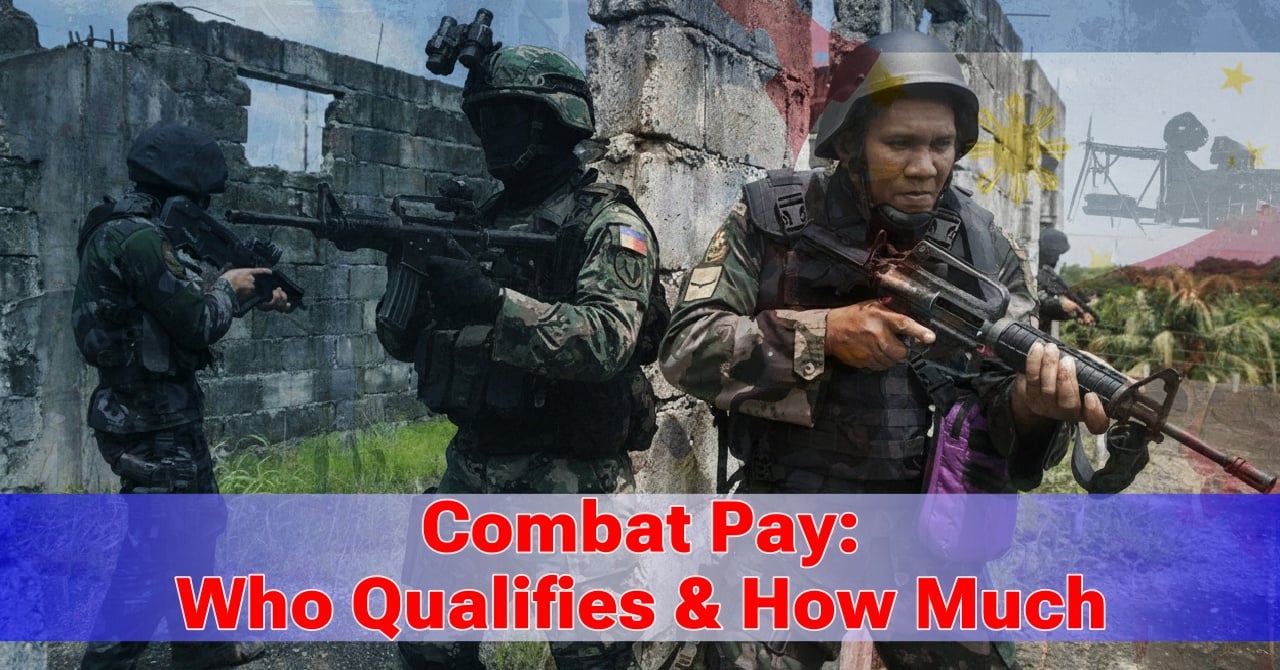
What Are Combat Duty Pay and Combat Incentive Pay
Combat Duty Pay and Combat Incentive Pay are additional financial benefits given to qualified members of the Armed Forces of the Philippines and the Philippine National Police who are assigned to combat or actual police operations.
These pays recognize two things:
- The ongoing risk of being assigned to combat areas
• The immediate danger of joining real combat missions
Quick Comparison Table
| Type of Pay | Purpose | Amount |
| Combat Duty Pay (CDP) | Monthly allowance for those assigned to combat or police operations | ₱3,000 per month |
| Combat Incentive Pay (CIP) | Daily allowance for actual combat participation | ₱300 per day, up to ₱3,000 per month |
These rates are based on DBM Budget Circular No. 2016-6 and Executive Order No. 3, s. 2016.
Who Is Eligible for Combat Duty Pay and Combat Incentive Pay
Eligibility depends on assignment, documentation, and actual involvement.
Eligible for Combat Duty Pay
- AFP officers and enlisted personnel assigned to combat units or operations
• PNP uniformed personnel assigned to active police operations
• Personnel officially included in a unit’s operational assignment
Combat Duty Pay is monthly and does not require daily combat exposure.
Eligible for Combat Incentive Pay
Combat Incentive Pay has stricter requirements.
To qualify, the personnel must:
- Be directly involved in combat operations
• Face armed threats from insurgents, terrorists, or lawless elements
• Be officially named in mission documents
CIP is only for actual combat participation, not routine patrols.
Conditions for Receiving Combat Incentive Pay
Combat Incentive Pay follows strict rules to avoid misuse.
To receive the ₱300 daily allowance:
- The operation must have a valid mission order
• The personnel’s name must appear in the task organization
• The total CIP must not exceed ₱3,000 per month
• CIP is paid on top of Combat Duty Pay
If even one requirement is missing, CIP may be denied.
How Combat Duty Pay and Combat Incentive Pay Are Released
Understanding the payment process helps avoid confusion.
Funding Source
- Charged against the Personnel Services budget of AFP or PNP
• Subject to annual budget availability
Disbursement Process
- Validated by unit commanders
• Processed by unit finance offices
• Released through regular payroll systems
Each branch issues its own internal guidelines through command channels.
How Families and Personnel Can Check If They Qualify
Many families feel hesitant to ask about pay. Knowing the right steps helps avoid conflict.
Step 1 Check the Assignment
Ask if the personnel was part of a combat or police operation with a valid mission order.
Step 2 Verify the Task Organization
Confirm that the name appears in the official OPORD, FRAG-O, or Mission Order.
Step 3 Coordinate With the Unit
Follow up with the unit’s administrative or finance office for validation.
Step 4 Educate Dependents
Families may inquire politely through official channels, especially if delays occur.
Step 5 Monitor Official Updates
Watch for new DBM circulars or executive orders that may change rates or rules.
Common Issues and Clarifications
Many concerns about combat pay come from misunderstandings.
Not All Operations Qualify
Only missions with direct combat involvement and proper documentation count.
No Retroactive Claims
Combat Incentive Pay applies only to validated current missions, not past deployments.
Monthly Cap Still Applies
Even if a mission lasts many days, CIP is capped at ₱3,000 per month.
Delays Can Happen
Processing depends on mission validation and budget timing.
Why These Pays Matter to Filipino Families
Combat Duty Pay and Combat Incentive Pay may look modest on paper, but they help cover:
- Extra food and supplies
- Transportation and communication costs
- Family needs during deployment
For many households, this support eases the strain during high-risk assignments.
What Filipinos Say About Combat Pay
From online forums and comment sections, many Filipinos share similar thoughts:
- Some families say the pay helps, but does not fully match the risk
- Others stress the importance of clear documentation to avoid delays
- Many spouses say timely release matters more than the amount
The shared message is clear: clarity and consistency matter as much as the benefit itself.
Frequently Asked Questions
- Is Combat Duty Pay automatic?
No. The personnel must be officially assigned to a combat or police operation. - Can someone receive CIP without CDP?
No. Combat Incentive Pay is given on top of Combat Duty Pay. - Does CIP apply to training exercises?
No. Only actual combat missions qualify. - Can families directly claim the pay?
No. Claims must go through the personnel’s unit and finance office. - Are these pays taxable?
They are generally treated as allowances, subject to government rules.
Final Thoughts
Combat Duty Pay and Combat Incentive Pay exist to recognize the risk carried by our uniformed personnel. While no amount can fully match the danger, understanding these benefits helps families plan better and avoid unnecessary stress.
If your loved one is on the front line, knowing their entitlements is one small way to stand with them.